
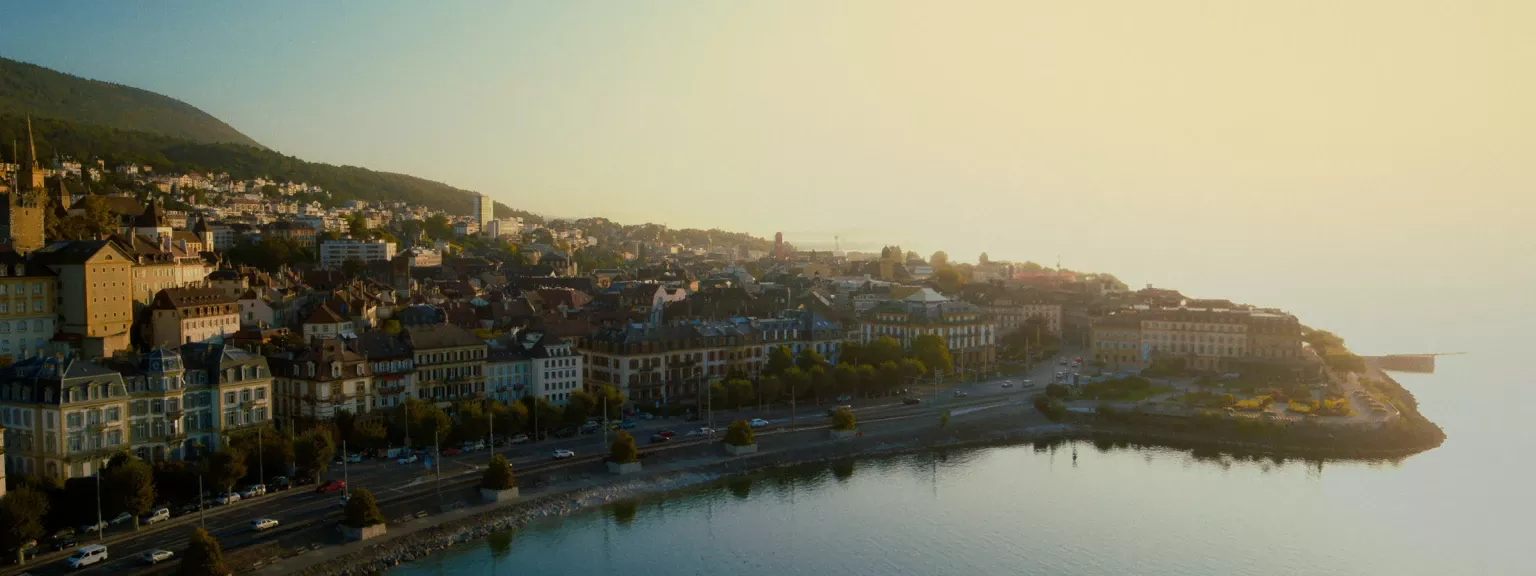
Nestled between the lake and the mountains, Neuchâtel is shaping the industries of the future. Through the revitalization of iconic buildings and the creation of three innovation ecosystems, the canton is capitalizing on the close ties between research, business, and production. The goal: to make the region a place where ideas take shape and to facilitate the transition from the lab to the market.

In the Swiss innovation landscape, Neuchâtel is moving forward with a clear vision: to provide research and industry with spaces where they can collaborate in practical ways.
This endeavor, rooted in a strong industrial tradition, is supported by an economic fabric that has continued to evolve since the watchmaking crisis of the 1970s. At that time, the canton had to reinvent itself: from watches to microelectronics, from mechanical engineering to medical technology, it learned to diversify its expertise while maintaining its precision and high standards of quality.
Today, this culture of adaptation is embodied in three innovation ecosystems: Human Lean Diagnostics (HLD), Les Métiers du Temps – Times Arts (MTTA), and Jaquet-Droz 7 (JD7), designed to bring together researchers, startups, SMEs, and large corporations around common goals: to innovate, test, and industrialize.
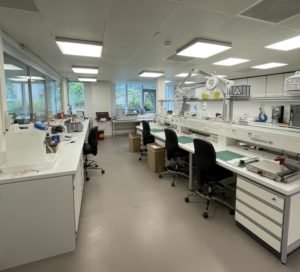
Supported by cantonal authorities, Microcity, and a network of academic and industrial partners, these projects provide a clear framework for economic stakeholders and breathe new life into Neuchâtel’s industrial sector.
A Strategy Built on Opportunities
Behind this momentum lies an ambitious land-use policy led by the government and its partners: repurposing former buildings into technology hubs. This strategy, which offers a wealth of opportunities, brings together startups, small and medium-sized businesses, large corporations, and research centers on a single site.
It is based on an active partnership between the government, municipalities, research institutes, and the local industrial sector. The Serrières complex, now dedicated to the HLD ecosystem, is the prime example of this.
More will follow: the buildings at 7 Rue Jaquet-Droz in Neuchâtel and 7 Hôtel-de-Ville in Le Locle will host applied research activities in collaboration with CSEM, Haute École Arc, CPNE, and Microcity.
Spaces Designed for Collaboration
Microcity will manage two iconic sites:
- The future headquarters of the MTTA ecosystem in Le Locle, dedicated to the time industry and artisanal excellence
- Les Usines, in the La Serrières valley in Neuchâtel.
This new ecosystem, which opened in June 2025, serves as the nerve center of the Human Lean Diagnostics (HLD) program. The site is intended to become a hub for companies active in the field of diagnostics, particularly in automation.
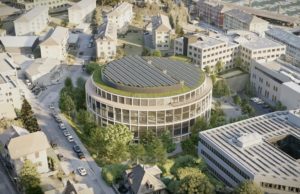
Alongside these buildings, the JD7 building will be located in the heart of Neuchâtel’s innovation district and will be dedicated to technology transfer with a focus on pre-industrialization.
As the operational backbone of this initiative, Microcity serves as a coordinator among ecosystems, businesses, and institutions. The arrival of a new director next January will mark the beginning of a new chapter for the organization, which is poised to strengthen synergies between applied research, industry, and economic attractiveness. These sites share a common philosophy: to welcome, connect, and accelerate.
A Hub for Applied Innovation
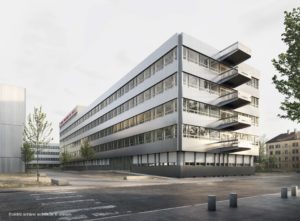
One of Neuchâtel’s major strengths lies in the density of its scientific ecosystem: the CSEM, the University of Neuchâtel (UniNE), the Haute École Arc (HE-Arc), the EPFL, the CPNE, and the FSRM are all located within a small radius. This proximity fosters collaboration, talent development, and technology transfer.
This region, on a human scale, offers a rare balance between quality of life and industrial performance. Its identity, rooted in precision and technical excellence, appeals to Swiss and foreign investors seeking a stable, well-connected environment focused on the technologies of the future.
“In Neuchâtel, we’ve chosen to bring research and industry together in spaces designed for collaboration. This is a way to accelerate projects, but also to build a sustainable economy that is open to the world.”
Florence Nater, State Councilor and head of the Department of Economy and Social Cohesion.
A Canton on the Move
With these three emerging ecosystems, repurposed buildings, and agile governance, Neuchâtel is already laying the groundwork for its future industry. This collaborative effort—both pragmatic and visionary—demonstrates a region’s ability to reinvent itself without compromising its identity. Here, innovation is built step by step, with method, consistency, and ambition.
Available spaces at the heart of innovation
Interested in joining these ecosystems? Spots are still available. Find all the information and contact details on the dedicated websites.
HLD – Human Lean Diagnostics
7,000 m² of laboratories and offices in Serrières (Usines 56/90). Launch: June 2025.
hld-ne.ch
Les Métiers du Temps – Times Arts (MTTA)
A 5,000 m² watchmaking center in Le Locle, scheduled to open in 2028. A research facility recognized by the Swiss Confederation as being of national importance.
mtta.ch
JD7 – Jacquet-Droz 7
Approximately 10,000 m² of flexible space for offices, laboratories, and cleanrooms. Scheduled for completion in 2027.
jd7.ch