
Discover the companies that make up Neuchâtel’s economic fabric!
Could you briefly describe your career path?
My name is Laurent Zwahlen, and I’m turning 62 this year. I attended the technical school in Le Locle, earned a CFC (Federal Certificate of Competence) as an electronics technician, and then worked for two years as a technician. After that, I worked at Swiss Timing as head of the R&D department before joining Migros to computerize the logistics center at the Marin market hall. After that, I completed an accelerated bachelor’s degree in computer science in Bern. Following an MBA, I worked for three years at SBS before its merger with UBS.
I am passionate about television and the technology used in television, and I founded my first company in 2000, LiveTools Technologie SA.
In what industry was your company operating?
It was the first company in the world to develop digital, wireless transmission technology for television cameras. The company was based in Marin and had sixteen employees. We received funding from various local government agencies and from UBS, which was still providing seed capital at the time. We developed the digital transmission system for the Tour de France, which is still in use today. Admittedly, it has evolved with high definition (HD), but the same basic technology is still in use.
In 2006, we sought funding to expand internationally, but unfortunately without success. Then we received a takeover offer from the company that organizes the Tour de France. They wanted to retain exclusive rights to our products. Consequently, they made an offer to acquire the company, which we accepted. The company is still based in Morges, Switzerland, and remains involved with the Tour de France. After that entrepreneurial venture, I founded NuLink in 2006.
What does NuLink do?
She offers consulting services. In fact, this approach seems to me to be better suited for remaining independent and not spending all my time seeking funding. One thing led to another, and I was commissioned to work on major projects such as the Olympic Games and the World Cycling Championships. I was also in charge of all the wireless cameras during the World Cup in Russia (2018) and in France (2019).
When you talk about consulting, what does that mean?
In the case of a World Cup, this encompasses the entire project management process: selecting the technology, integrating the systems, presenting the systems to the client (FIFA, in this case), and conducting tests and demonstrations. Then system manufacturing begins (e.g., outsourcing the production of electronic circuit boards), operational teams are formed, and finally, the technicians travel to the event venues. For the World Cup in Russia, there were two technicians per city (twelve cities in total), and I stayed in Moscow to provide technical support. All of this took place over a six-week period.
During the Olympic Games in Rio de Janeiro (Brazil), I was in charge of all the wireless cameras for Olympic Broadcasting Services, the company that manages TV rights and production for the International Olympic Committee (IOC). I worked for them on a periodic basis, with contracts tied to specific events.
What are NuLink's latest activities?
In addition to its consulting activities, NuLink partnered with EPFL on a major European project called 4KREPROSYS, as part of the Celtic Next program (under the Eureka umbrella). The Swiss portion of this project is funded by Innosuisse (approximately one million). We are collaborating with seven international partners who have received 2.5 million in funding. As part of this project, we developed a new HEVC (High Efficiency Video Coding) compressor for video compression. In fact, we received the award for best multimedia project from Celtic-Next on June 19, 2019.
What is the advantage of this new method of compressing images?
In the past, television was standard definition; then we moved on to high definition, which came with an increase in bitrate. Now, images are in 4K quality, for which we have developed a compressor. Indeed, the bitrate increases considerably. However, the cables that carry the programming through the cable network aren’t much larger or more powerful. Consequently, we need more advanced technology to compress these increasing data rates so they can fit through the existing cable sections.
In fact, the EPLF has one of the world’s leading audio-video compression laboratories. The professor in charge of this laboratory, Marco Mattavelli, is one of the leading experts in the field and also serves as one of the heads of standardization at MPEG.
What next steps will you take based on this research?
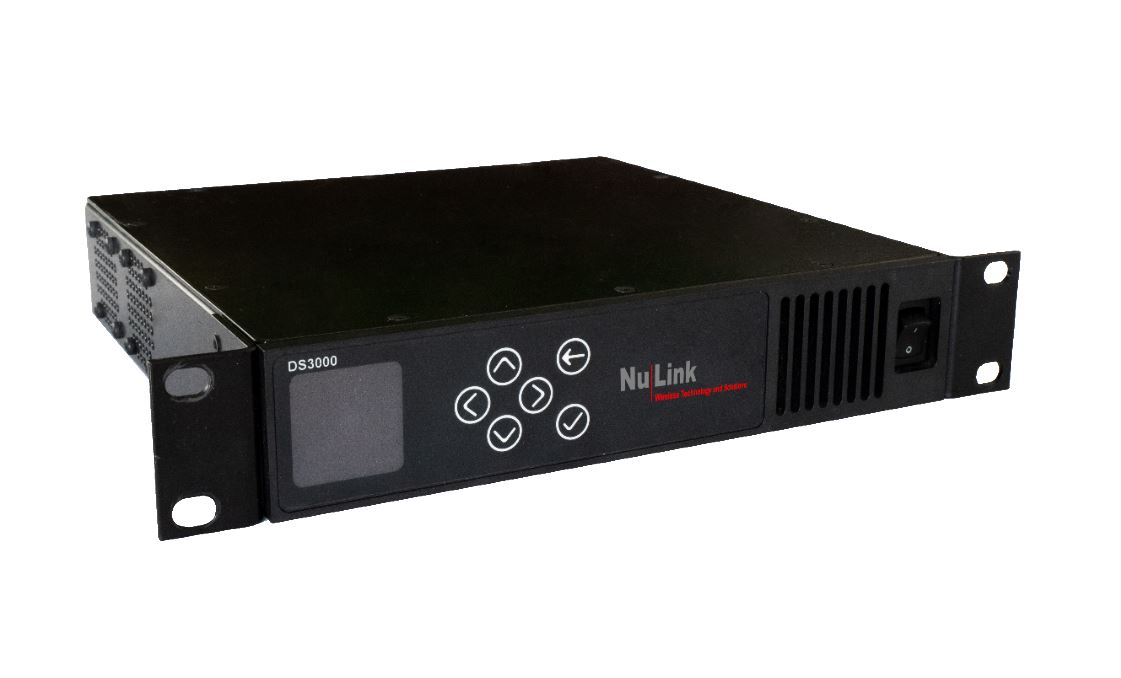
We would like to bring this product to market. We have already manufactured 150 units, which were used last year at the World Cup in Russia.
In addition, the product includes a wireless modem that still requires further development. To that end, we have relaunched a research program—100% Swiss this time—in the hope of keeping the technology and manufacturing of the product in Switzerland.
What is your vision for 5G?
Everyone is talking about 5G, which is the next generation of 4G. Media attention is focused on the public networks (Swisscom, Salt, Sunrise). Once 5G becomes available, users will need to upgrade their phones to access higher speeds. In short, file transfers will be faster (30 to 40 times faster) and network latency will be reduced to 5–10 milliseconds (the time between sending and receiving a message). For consumers, this is almost a “gimmick.” However, for connected devices such as self-driving cars, the speed of data transmission is crucial—for example, during emergency braking. Thus, a car that is braking can alert all other vehicles very quickly to prevent accidents (40 milliseconds on a highway can amount to several meters, depending on the speed of the cars). In short, 5G will primarily impact non-consumer applications; individual consumers won’t really be affected!
5G is a complete game-changer; it is essentially a data communication network that also allows for “voice” communication. The entire industry will be focusing on the “communication” aspect. More specifically, this involves data exchanges that can include live video or the transmission of data to control a robot, for example.
Which companies might be interested in this type of communication?
The list of potential customers is very extensive. Migros, for example, has a logistics center in Marin from which it delivers goods to its stores every night. Deliveries are made by truck on pallets, in boxes, etc. The future lies in automating and robotizing all processes, particularly with automated pallet systems. To manage this, very fast wireless communications will be required (a single incorrect command could lead to an accident).
Wi-Fi currently does not support this type of communication, so 5G is the ideal candidate for this kind of transmission . It is in this context that we are moving toward “private 5G.” It is a system that can be installed anywhere (assembly halls, soccer stadiums, in fields). A private network will be managed by its user. The user will have their own SIM cards (one per connected device) and will manage their network as they see fit, without Swisscom or any other carrier (no subscription required).
Unfortunately, in my opinion, Switzerland made a mistake by selling nearly all of its 5G spectrum to telecom operators. Some spectrum is still available, but there will be issues when the industry wants to implement private 5G networks.
NuLink has begun developing comprehensive private 5G solutions—ranging from base stations to specialized modems for professional audiovisual applications, as this is our area of expertise—and we are already in contact with potential customers. We will then be able to adapt our solution to other fields, as the underlying philosophy remains the same.
Why didn't the industry reserve or secure any 5G spectrum during the auction?
It was OFCOM that sold the frequencies, without necessarily consulting with the Swiss industry. When the industry makes its case, OFCOM will forward the requests to the operators, who may not necessarily be interested in all SME projects and will likely prioritize large-scale ones. SUNRISE will probably be more open to this type of business, unlike SWISSCOM. In fact, we’ve been discussing our projects with SWISSCOM for a year and a half now, with no concrete results to date.
How do you plan to develop your new project?
Since we couldn’t find a service provider but are fortunate enough—thanks to a private network—to be able to use a frequency outside the telephone spectrum, we submitted an Innosuisse project at the end of July 2019. The project brings together OFCOM, a small department at Swisscom (International Connectivity – Fiber Optics), EPFL, SR G SSR, the Yverdon School of Engineering, and NuLink. For these projects, I continue to work with EPFL and the Yverdon School of Engineering. We received the good news on September 13: INNOSUISSE will fund our project with 800,000. I would like to take this opportunity to thank the canton’s Department of Economic Affairs (Jean-Luc Bochatay) as well as our coaches Claude Muller (Alliance) and Thomas Meier (Platinn), who helped us put together the proposal.
Swisscom appears ready to invest in and purchase equipment for this project. In addition, an agreement has been signed with Swiss Timing and NuLink to develop the first private networks for the purpose of conducting 4G tests (without modems, using only base stations). We have the support of Ericsson, which is Swisscom’s 5G supplier. They will support us with the private 5G portion, primarily by allowing us to use their test labs.
In practical terms, what impact would your product have?
For major sporting events, you can expect about 40 trucks full of equipment. For the Olympic Games in Rio de Janeiro, we shipped 120 semi-trailers by boat, and 7,200 specialists were on site. The goal would be to ship only the cameras, microphones, timing equipment, and scoreboards, while significantly reducing the number of employees, vehicles, and containers that need to be transported. To achieve this, we will set up a private network during these events, with a fiber-optic connection to manage all the cameras remotely (from Madrid or Corgémont). We plan to present and implement this idea during the Youth Olympic Games in Lausanne in January 2020. As part of this effort, we are currently preparing a proposal with Swisscom (a sponsor of the Games) to present the project and inform the IOC and Olympic Broadcasting Services.
Today, it would already be possible to replace the trucks with fiber-optic cables connected to each camera. We would lose the equipment’s mobility, but it would work. A soccer field with 20 cameras—18 of which are fixed—would pose no problem. However, installing fiber-optic cabling for just one night is very costly. Furthermore, the solution lacks flexibility. Every time a camera is moved, the cabling would need to be adjusted, requiring additional staff. On the other hand, all these procedures would be simplified by integrating all audio-video equipment into a private wireless 5G network.
What challenges would there be in implementing this technology?
Every company will face major technological and technical challenges. Swiss Timing must develop a new approach to timing because if the signal is disrupted or interfered with when a runner crosses the finish line, time will be lost. We must therefore devise a solution to ensure reliable timing, taking into account the risks of disruptions and data loss. The challenge for audio-video systems centers primarily on “end-to-end” latency. For example, the person operating the camera from Madrid will not be able to make the correct adjustments if there is a significant delay between what is being filmed and what they see. “End-to-end” latency is a major challenge where every step must be optimized. On a 4G network, 60 to 70 milliseconds are lost in the network, whereas with 5G, latency will be 5 milliseconds. Then you have to add the 40 milliseconds for encoding and decoding, and finally the distance between the event location and the control center (Tokyo to Madrid is about 40–50 milliseconds). The goal is to never exceed 150 milliseconds across the entire chain.
Will NuLink's strategy change with the production of this equipment?
There are two conditions for NuLink to become an equipment manufacturer again. The first has been met with INNOSUISSE funding.
The second will be more difficult to meet: finding investors to provide approximately 1.5 million. If we secure this funding, we will enter the international market.
What are the challenges involved in financing a project in Switzerland?
In Switzerland, when launching a project, there are financing options available (seed capital, business angels). The real problem arises after the seed-capital stage, when financing options for industrialization, manufacturing, and marketing are lacking. It’s never the right product or the right time. This phenomenon is quite typical of Switzerland. For this reason, many Swiss projects end up expanding to the U.S. We have great projects and excellent schools, but often the problem arises at the very end. I experienced this firsthand during my first entrepreneurial venture when we sold our company to a French firm, simply because we couldn’t secure funding in Switzerland.
Article written by Victoria Barras & Abnet Sebhatu