
As part of its efforts to support the development of the next generation, the Department of Economic Affairs, in partnership with Mikron, IMA, Rollomatic, CIPOSA, and Microcity Neuchâtel Innovation, is supporting a hands-on course held over 11 Saturdays titled “Robots Are for Girls,” organized by EPFL ’s Science Outreach program.
A conversation with one of the workshop instructors, Alice Guntli.
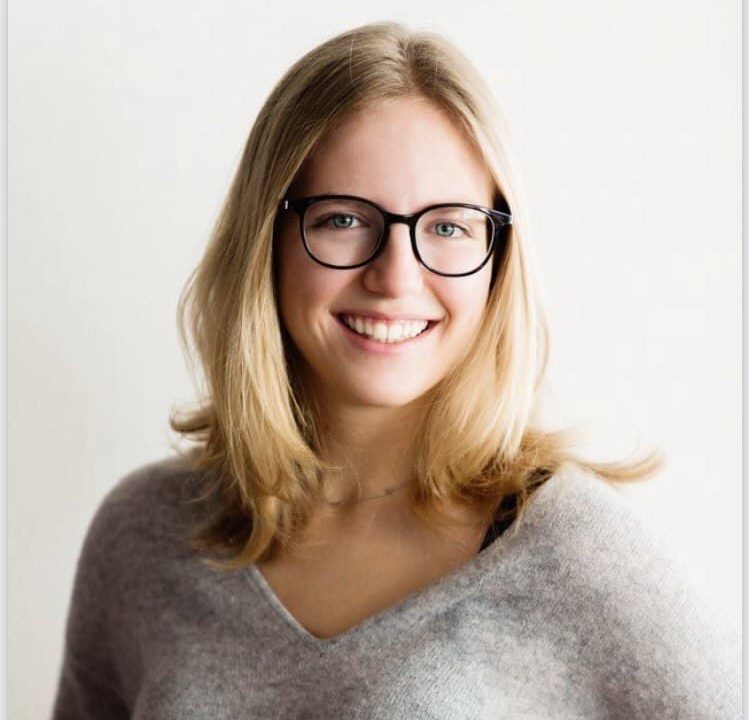
A native of Neuchâtel, Alice Guntli is 21 years old and has just completed her bachelor’s degree in microengineering at EPFL. The classes she taught at the “Robots Are for Girls” workshops introduced her to the world of robotics—a field she decided to specialize in for her master’s degree, which she began this fall.
What challenges have you faced while teaching children?
I was fortunate to work with students who were, for the most part, interested in coding. So it wasn’t hard to motivate them to complete the various exercises. At 11 or 12 years old, they’re at an age where we can have meaningful discussions. Some of the participants expressed an interest in continuing to code after class and in purchasing an educational robot.
Do you have a story to share?
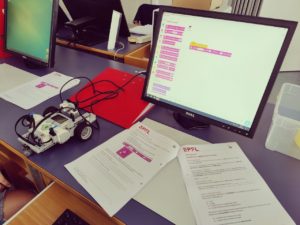
During one of the workshops, the task was to program the robot to push small paper rocks out of a black circle. One of the groups of girls built the robot so that its arms were long enough to knock the rocks out, without having to program the sensors. The approach was completely different from what we had imagined, but it worked!
In your opinion, what is the point of separating girls and boys?
I’ve noticed that when girls have their own work environment, the pressure exerted by boys—which stems from our gendered upbringing—disappears. At that age, I believe it’s crucial for girls to realize that they are capable of succeeding in science, because that’s when many decisions are made regarding the rest of their educational journey.
EPFL has taken active institutional steps by creating a vice-presidency for responsible transformation that promotes gender equality, among other things. Student-led organizations such as EPFelles and Polyquity have been established, which helps bring the issue to the attention of the institution.
Why are you looking forward to starting the master's program in robotics?
The bachelor’s program in microtechnology is extremely comprehensive but leaves little room for course selection. In my master’s program, I have plenty of opportunities to create a personalized curriculum. In particular, we can take introductory courses in neuroscience and deep learning. I was able to choose a course on drones and another on artificial intelligence. The goal is to build a foundation and learn where to look for information as needed.
I’m already imagining pursuing a Ph.D. after my master’s, and I’d really enjoy working on mobile robots such as drones or space robots. I’m a little less interested in medical or industrial robotics.