
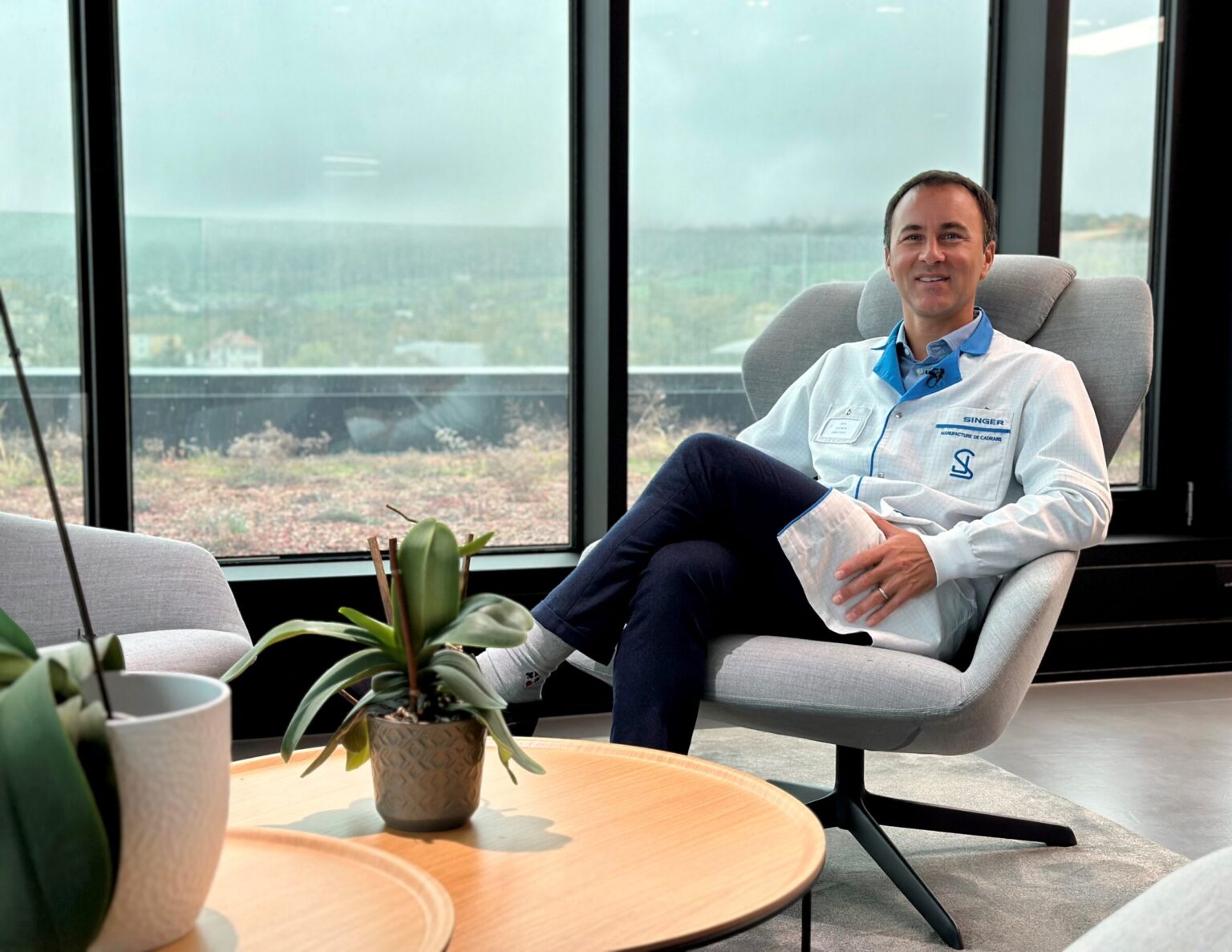
In the world of Swiss watchmaking, some companies stand out not only for their expertise, but also for their history and commitment to excellence. Jean Singer et Cie SA, founded in 1919 by the Singer family, is one such institution. Now led by Joris Engisch, who represents the fifth generation, this family business has adapted to the industry’s challenges while preserving its heritage. In this interview, Joris takes us behind the scenes of this manufacturer of exceptional watch dials, discussing its challenges, his motivations and his ambitions for the future, while sharing his commitment to wellbeing at work.
Could you introduce yourself?
My name is Joris Engisch. I am fortunate to be the owner and Managing Director of Jean Singer et Cie SA.
What does your company do?
We specialise in manufacturing watch dials for Switzerland’s most prestigious watch brands.
How long has the company been in business?
The company was founded in 1919 by the Singer family. We celebrated our centenary in 2019. Today, I represent the second family to run the business, but the fifth generation overall. There were two generations of the Singer family, followed by three generations of the Engisch family.
So, before you, your father and grandfather ran the company?
Yes, my grandfather, then my father, and now me. Before that, Jean Singer founded the company, and his son, Paul Émile, succeeded him.
What led you to take over the company? Children often choose careers in other fields.
That’s true, and my own path initially took a different direction. I started studying medicine, but medicine didn’t want me… so I had to change career paths at just 20. I switched to engineering. After graduating, I worked for a watch brand in the region for three years before joining the family business in 2007 to work alongside my father.
Does your father still work with you?
No, he retired in 2011.
Was that when you took over?
Yes, exactly. I officially took over as Managing Director in 2011.
What challenges have you faced over the years?
The biggest challenge today is that our clients are also our competitors. Many watch brands have their own in-house workshops producing dials and components. We have to outperform them for them to continue working with us. That is a real challenge, particularly given the considerable financial resources available to these large groups.
How do you stay competitive and attract the best talent?
We have to offer more than just a job. We create a welcoming, family atmosphere at work. For example, we have a gym and an employee who offers massages, helping to create an environment where our staff feel valued. Here, employees are not just numbers; they feel that they truly matter. That is what young people are looking for today: meaningful work and recognition.
How many employees do you currently have?
We have 383 employees at our Boudry site. We also have a subsidiary in La Chaux-de-Fonds and another in Bangkok, both specialising in dials for the Swiss watch industry.
How many dials do you produce each year?
As a family business, we are very discreet about our figures, but in 2024 we produced approximately 1.5 million dials across all our companies.
That’s impressive. Is everything automated?
Not entirely. Some stages are automated, but many operations, particularly finishing, are still carried out by hand. We have 650 active dial references, and a third of them are new each year. It is difficult to automate a process that is constantly evolving.
How do you maintain the quality of your work? I imagine luxury brands have very high expectations.
It is becoming increasingly challenging because luxury watches have to be perfect. Defects that were accepted years ago are no longer tolerated today, which is understandable. We also have much more sophisticated inspection tools. We train our employees to maintain these high standards.
Do you use automated inspection equipment?
Yes, we use automated inspection systems, but the human eye remains essential. The standard in watchmaking is that no defect should be visible to the naked eye at a distance of 30 cm. Although we use microscopes to check the details, it is important to strike a balance.
What personally motivates you to keep going?
I actively chose to take over the company, unlike my father, who felt somewhat obliged to do so. My aim is to secure the company’s long-term future and perhaps pass it on to my children, if they want to take over and have the necessary skills.
You have four children, is that right? Are they already interested in the company?
Yes, I have 13-year-old twins, a 10-year-old boy and a little girl who is two. They already ask questions about the company and are curious about it. They ask questions that I wasn’t asking at their age, which shows an interest from an early age. Perhaps one of them will take over one day?
In your view, what could the canton of Neuchâtel do to attract more businesses?
It should make it easier for local businesses to access land and premises. A great deal of effort goes into attracting large companies from elsewhere, which is positive, but we must not forget the local businesses that have been here for decades. They have exceptional expertise and skills, and they too are looking to grow. It is essential to raise the profile of all these businesses and recognise their value, because they form the backbone of the regional economy and bring innovation and dynamism.
Could this also be linked to watchmaking’s tradition of discretion?
Absolutely. Historically, there has been a culture of secrecy in watchmaking. We are often not allowed to say who we work with, even if everyone knows. Today, I think it is a shame that brands do not acknowledge that they rely on suppliers like us to produce their watches. That recognition could help us raise our profile.